Rodent Control in Overland Park That Ends With Sealed Entry Points
Rodent control in Overland Park from a Kansas-licensed pest control operator (Kansas pesticide business license #101003): an inspection that starts outside, mouse and rat removal, entry-point sealing with metal mesh, hardware cloth and door seals, and a written list of what we found, what we sealed and what we recommend. Mice after a treatment can mean an opening is still there, mice remain inside, or the control plan missed an active area. Inspection helps separate those possibilities.
Illustration of typical entry points on a Johnson County two-story with an attached garage and a finished walkout basement. Not a photo of a specific home.Explore the entry points ↗
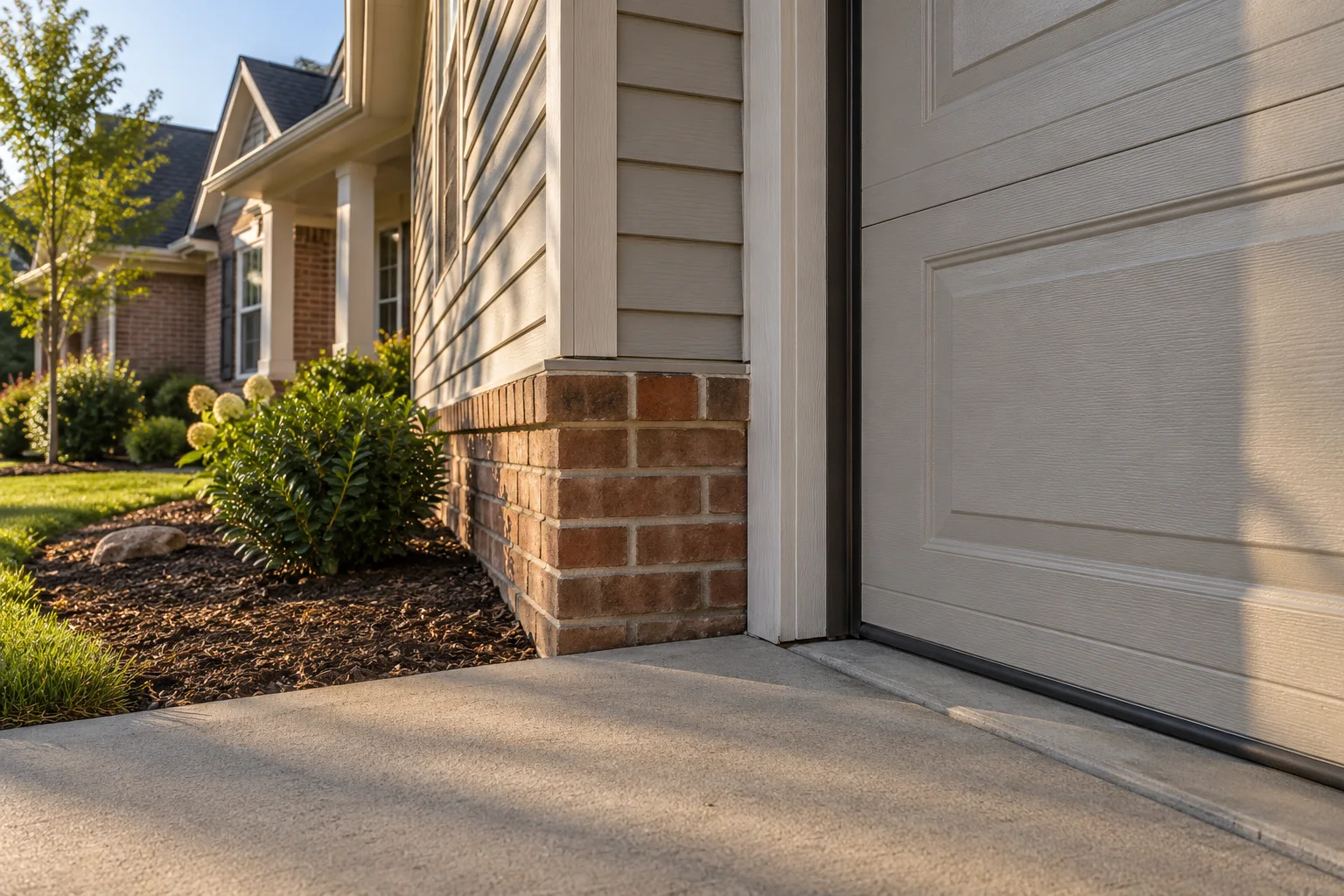
A house mouse fits through a gap a little over a quarter inch wide (K-State Research and Extension, MF1123). Most Overland Park homes have several: the corner of the garage door seal, the gap where the AC line enters the wall, the dryer vent that never quite closes. Traps and bait remove the mice you have. They do nothing about the next ones.
Our rodent control service starts with an inspection of the outside of your house and the places inside where mice actually travel. Then we remove what's there, seal what we can reach, and hand you a written list of what we found, what we sealed, and anything we recommend but didn't do. You'll know exactly what you paid for — and exactly what to ask anyone else who quotes you.
What does rodent control in Overland Park include?
Inspection. Exterior perimeter first, at grade level and at the garage; then the interior areas where you've seen activity. We're looking for how they got in, not just where they've been.
Removal. Traps placed where mice actually travel — along walls, behind appliances, in the garage — spaced the way the extension guidance recommends, and checked on a schedule.
Sealing. Metal mesh and hardware cloth where a mouse could chew back through foam or caulk; garage door seals with corner blocks; door sweeps; vent covers. What we seal and why →
Written findings. A one-page list: every entry point we found, numbered; what we sealed today; what we recommend but didn't do; and when we'll be back to check. See an example →
Mice or rats: which do Johnson County homes usually have?
Most Johnson County calls are house mice; rats are less common but change the trap scale and bait approach. Either way, the first visit covers inspection, species identification, trap placement and a timeline. Mouse and rat removal in Overland Park →
Which Johnson County cities do you serve?
Overland Park first. We also take rodent jobs in Leawood, Olathe, Lenexa, Shawnee, Prairie Village, Mission, Merriam, Gardner and Spring Hill. Service area and scheduling →
Is it worth hiring someone for mice?
If activity continues or returns, an inspection can help identify the animal, review the control plan and find possible entry points. Bring dated observations and any previous repair or treatment record so the next visit addresses a specific gap.
How long until they're gone?
Timing depends on the activity, access and control plan. Continued or returning signs call for a review of trapping, remaining mice and possible entry points; time alone does not establish the cause. Ask how progress and follow-up will be assessed.
Will you seal a finished basement?
We seal what can be reached. In a finished basement the rim joist is behind drywall, so the entry point has to be found from outside — which is why we start there. If an opening can only be closed from inside a finished wall, we'll tell you that in writing rather than guess.
What should I do before the inspection?
Leave the evidence where it is and write down where and when you saw it. CDC advises against sweeping or vacuuming rodent urine, droppings or nesting material, so photograph droppings instead of cleaning them up first. A short dated list of spots ("under kitchen sink, rear left", "garage, north door corner") helps the inspector separate old signs from new activity. If anyone treated the house in the last 12 months, note what was done and when.
Can I use store-bought mouse poison while I wait?
You can, within the label, but it will not close the gap the mice used. EPA limits consumer rodenticide products to ready-to-use bait stations with block or paste bait, and says most anticoagulant baits take four days to two weeks to kill a rodent after it starts feeding. Keep any bait station out of reach of children and pets, and tell the inspector where it is so trapping and sealing can be planned around it.